

Gap 360 is now Adventure360. New name, same great adventures.
Read More


Last Updated 5th November 2026

I’m counting down the days until my life starts sounding like the Seoul Subway again. Literally, they play a musical jingle when your transfer arrives.
It’s a tiny detail, but it tells you everything you need to know about getting around South Korea. Public transport here is all about efficiency. And with a few tips, you’ll be navigating it like a pro in no time.
From high-speed trains to essential apps, and demystifying the T-money card, I’ll answer it all.
Key Takeaways:

A T-money card is a contactless smart card which you can use for public transport in South Korea, as well as for small purchases at convenience stores.
The card never expires, but can only be recharged with physical cash (Korean Won). It can easily be topped up at convenience store counters or at ticket machines in the subway. You can go for a plain design, or get creative with lots of custom options, including K-Pop-themed.
Joining one of our South Korea tours? Your group leader may provide you with a T-money card. I got given a cute Disney card on the tour I did! You can find this out in your pre-departure details, or by contacting your personally assigned travel coordinator.
You can purchase a T-Money card at the airport, convenience stores, subway stations, or at select department stores. It costs around the equivalent of £3. When you buy a card, it has no credit, so you will still need to load cash onto it separately.
₩20,000 (£11.50) is a good amount to get you started, without requiring constant top-ups. You can check your balance at ticket machine counters. Public transport in South Korea is surprisingly affordable, but if you’re travelling a lot, it can be easy to forget how much you need.
Although T-Money cards do technically accept digital top-ups, it doesn’t always work for foreign numbers or credit cards. There are plans to change this, but until then, cash is still your easiest option when visiting South Korea.
T-money cards can be used across all major cities and public transport systems in South Korea. So this includes the Subway, as well as bus journeys within a city.
Sometimes you can use a T-money card for taxis, provided that they display the official T-money logo. It can be used to pay for small items at convenience stores or at vending machines.
You can’t use a T-money card for longer journeys between cities or towns. This requires a separate ticket.
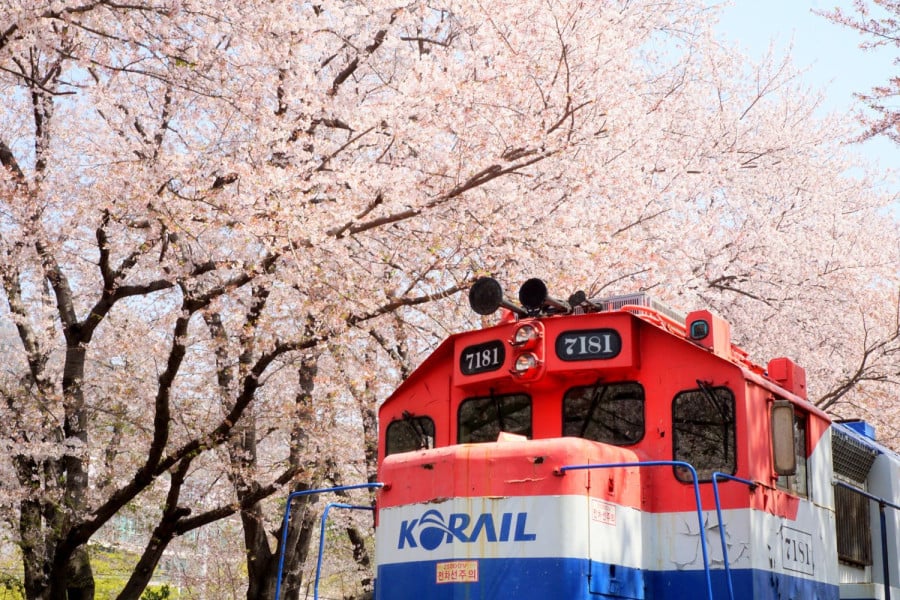
KORAIL is Korea’s rail system, operating the three main types of trains available in South Korea. These are:
You can purchase tickets online through the KORAIL website or through an official third-party provider. This can also be done in person at train stations, although KTX tickets are in demand, so it’s best to purchase in advance.
It really depends on how much of the country you’ll be exploring. If you’re ticking off multiple cities, it can be really helpful. The KORAIL Pass is exclusive to foreign visitors, so whilst it’s technically more expensive than purchasing single journeys, it’s designed for ease of travel.
If you’re just looking to do a single big trip, such as Seoul to Busan, you may find it easier to just book individual tickets.
Travelling to Jeju Island? You’ll find loads of internal flight options running daily from both Seoul and Busan, South Korea’s two main cities.
Jeju Island has very limited public transport outside of its two cities, Jeju City and Seogwipo-si. Your best option for getting around is either hiring a car or choosing a group that includes it as a destination. You can also use taxis for shorter journeys, bookable either through Kakao T or Uber.
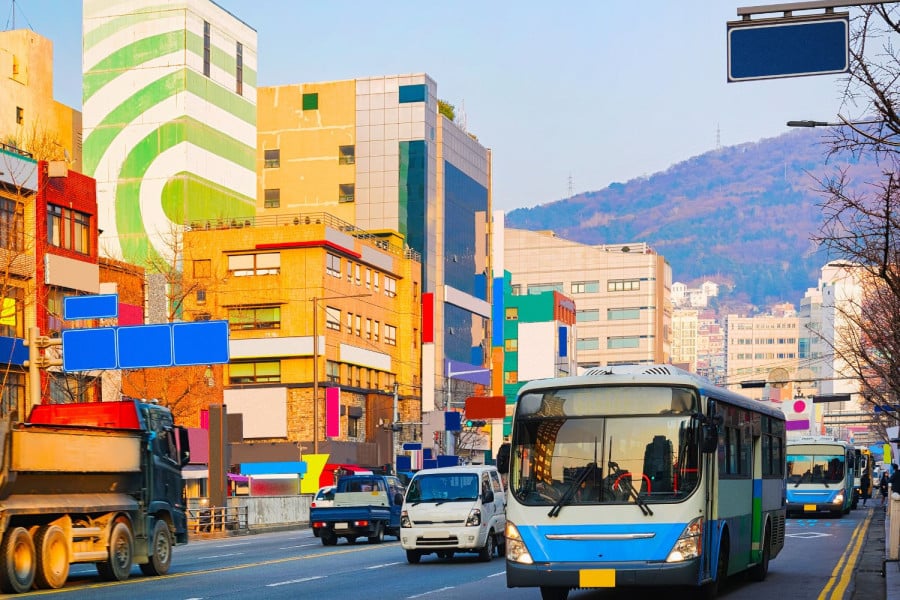
Longer bus journeys can be a great way to go off-the-beaten-track in South Korea, taking you to the smaller towns and villages that a high-speed train cannot reach. Buses themselves are well-connected throughout South Korea, although traffic means journey times aren’t guaranteed.
Because it’s more of a local transport option, there is more of a cultural barrier. Online ticket vendors don’t always accept international cards, so you may have to buy your tickets in person.

Group tours are the easiest way to get around South Korea. Your transport and accommodation are included, plus you’ll be travelling around the country with an expert group leader and new friends.
Even if you’d still like to do some independent travel, combining it with a tour can be a great way to boost your confidence and get familiar with the culture in the convenience of a group dynamic.

I recommend that you give yourself at least 10 days in South Korea. In that time, you can tick off Seoul city life, Busan beaches and the historical sights of Gyeongju. If you extend it to two weeks, you could also fit in a journey to Jeju Island.
Honestly though, I think even a short stopover in Seoul is totally worth it, if you’re in between exploring other Asian countries.

Google Maps doesn’t work in South Korea, and Apple Maps is also fairly limited. So I recommend downloading Naver or Kakao Maps instead, ahead of time.
I found Naver to be really helpful whilst navigating the Seoul Subway. Although there is some English signage, the app broke down the most efficient journeys in real time.
Kakao T is South Korea’s main transportation app. If you’re travelling to more rural areas, it’s worth downloading. As a visitor, Kakao T requires a few extra steps to set up.
Personally, I found Uber to be an affordable and accessible option when travelling around South Korea, but especially in Seoul.
Photo translation apps can be a big game-changer when you’re travelling, whether it’s food menus or public signage.
My top recommendation would be Papago. This is a Korean-owned app, and so it goes without saying that it’s great at handling Korean honorifics and sentence structures.
Exact timings are different for every city and time of the year, but as a general rule: when midnight arrives, South Korea’s public transport usually stops, and doesn’t restart until the early morning, at around 5am.
So… ready to start exploring? Give it a few days in South Korea, and you’ll probably become just as obsessed with this destination as I am. If you need more convincing, check out my guide on Why South Korea is My New Favourite Destination.
We’ve also included some FAQs below. Have a question that isn’t answered below? Get in touch with our friendly travel experts.
I’m jealous! Your group leader will get you set up with everything you need, including your physical T-Money card. It’s helpful to have Naver Maps and Uber installed ahead of your arrival, so you’re ready to go.
A T-Money card is a contactless smart card, primarily used for accessing public transport in South Korea.
You can get a T-Money card at the airport, convenience stores, subway stations, or at select department stores.
Yes. You will need physical cash to top up your T-Money Card.
The KTX are high-speed trains, operating similarly to Japanese bullet trains. This is run by KORAIL, South Korea’s rail system.


Sign up to our newsletter to get the latest advice, inspiration, and news.